
Many things have changed in the world since the first independent travelers ventured off into unknown a few decades ago…

When hippies were discovering the Asia, Africa, South America or even Eastern Europe, travel was harder and they were immersed in the foreign culture. They may have a small budget, but the means of international transport were no cheap thing, so they had to do it unconventionally. The communication with home and Western world was harder, local language was easier to pick up when there was no Google translate to aid their hand gestures. Most of all, almost all of the roads were less-travelled or off-the-path.
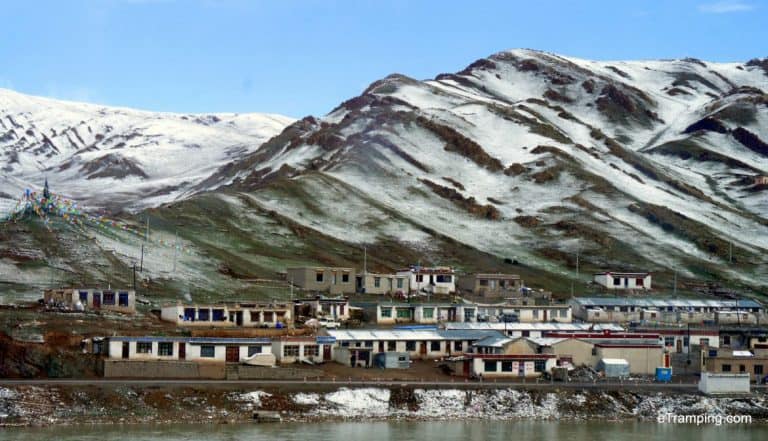
This is no longer true in majority of places around the globe, and thus backpackers evolved.
What it meant to be a backpacker
Backpackers were a different breed than what they are now. The experience was more focused on local people and learning their customs, cultures and languages. Since there were nearly no western restaurants abroad, backpackers had to eat what they’re offered. Even information on how to get from one place to another had to come from a local or fellow backpacker who has already done something similar, but it was much harder to find the latter. Lonely planet books became popular not so long ago, so preparation for such a journey took more than $20 in a book store.
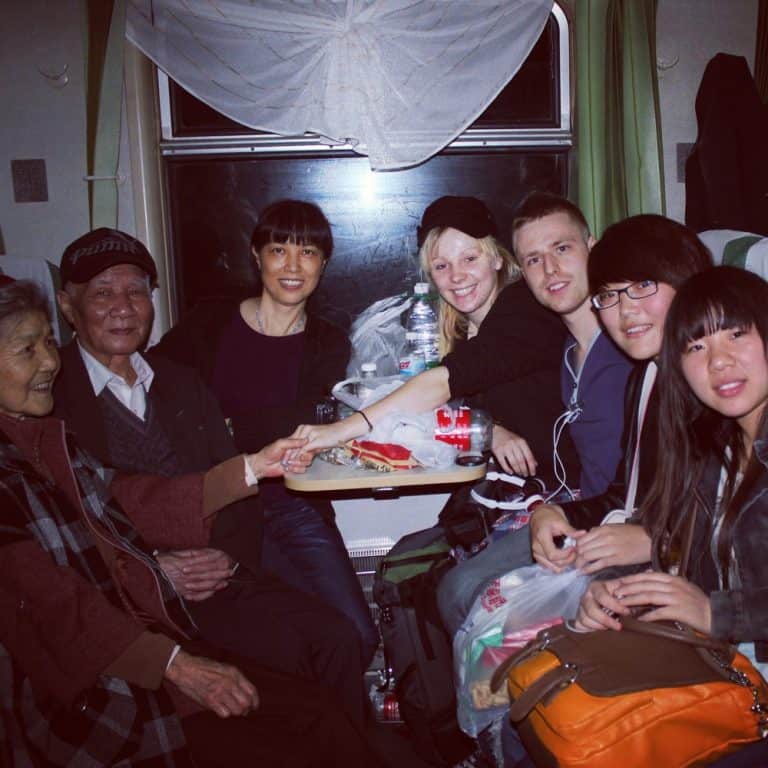
People who had passion for discovery, mostly carrying huge backpacks, were proud to be independent travelers on low budget. They came up with a name backpacking and felt an instant liking for people who did what they did. It meant something to be a backpacker, so much so it became mainstream now. And all of it was true as recently as 10-15 years ago.
What backpackers do now
Technological advancements made it easy to share information, cheap international flights made it easy to travel far, and mass media including internet made it easy to share information. Foreign independent long-term travel became cheaper, faster, safer and much more common. It’s even much easier to develop online source of income to support travels.
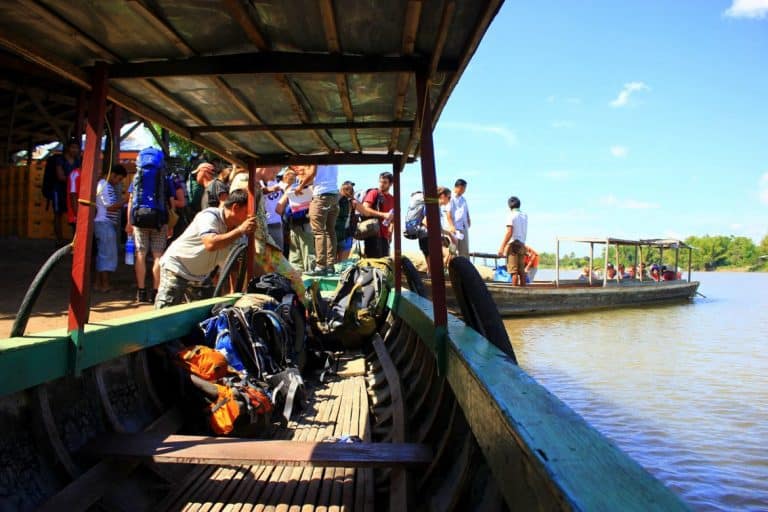
So what backpackers tend to do now (not all, of course)? Party, and party they do. Seems like the easier access to backpacking and the fact that it became mainstream did the term no good deed. Instead of immersion in a foreign culture, young people just before going to university, or just after graduating, go on long vacation to party just like at home. The difference is that they call them selves backpackers, but instead of learning the new culture, they abuse the lesser regulation to do things they wouldn’t do at their home countries.

For example, once a peaceful island of Koh Phangan in Thailand is now a backpacking destination where thousands of young people go to drink beyond any limit. The societies of such destinations change dramatically from hospitable and welcoming to greedy and loathing Western culture. No wonder, anyone who visited Vang Vieng in Laos can see it on peoples’ faces. Money is not what these local people were brought up to value the most, but since that’s the only good thing that is left for them after the visitors leave – they’ve learned to use it.
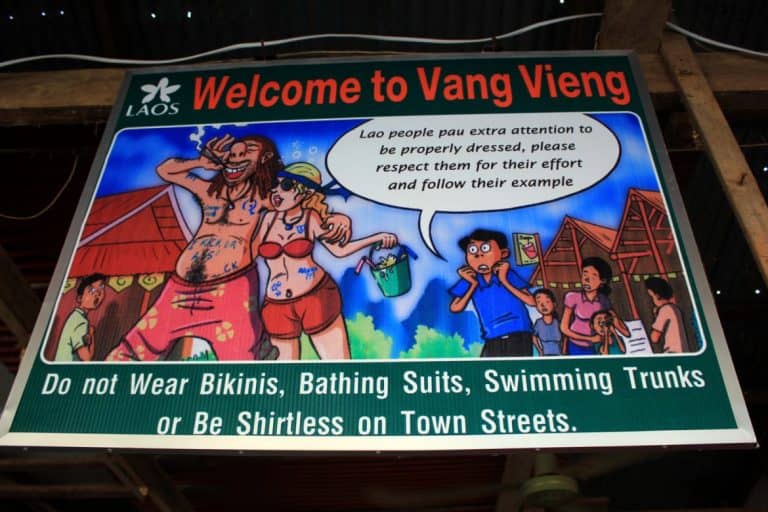
Backpackers now are mostly people who travel to foreign countries to party and meet other backpackers. It’s only a wild break from their family and time to do things they’d be scared or ashamed to do back home. Of course I’m not saying that a traveller cannot drink, but if majority of the journey is spent drunk, it’s as good as staying at home.
What are the alternatives
Well, for one people who do this should revise what they call themselves – “drinkpacker” should work. Then again, there are already other names in use, such as “flashpacker” or “poshpacker”. I personally call myself tramp. This is a word that rarely anyone would like to be called in their city, but for me it means much more than a homeless. In the context of a traveller, it’s someone temporarily homeless so that they can have more freedom. It’s inspired by Into the Wild where the main character called himself Alexander SuperTramp.
What do you think about today’s backpackers? What other names can you suggest for independent long-term travelers?


81 thoughts on “What Is Today’s Backpacker And Why There Is a Need For New Name”
Hell I’m in Bangkok right now & staying in what I would call a resort. I carry a backpack but when I booked here it was so cheap & I am enjoying staying at a very nice place for once. Although I understand what you mean. I haven’t been drunk at all though I’ve had a few beers here and there. I always feel I am trying to be some sort of ambassador for my country wherever I am and never want be a stereotypical drunk. Sure I’ve had my share of morning headaches but there is a lot more to do than just drink. But I am not judgmental either. To each his own I guess …. ;)
Great post, Agness! I totally agree with some points mentioned here. It is a rather sad thing to see that plenty of youngsters waste their once in a lifetime opportunity to enrich themselves by getting immersed in a totally foreign, often amazing and rich culture. Instead they choose to do the same things as back home, with only differences being clothes they wear, temperature outside and the prices of drinks.
However, based on my current travel experience, although the world is already full of those so-called “backpacker dens”, it’s incredibly easy to get out of them and get a totally different (which in this context means – better) treatment from the locals. Let’s take Kathmandu for example – few minutes stroll away out of the touristy Tamel district, plenty of smiles, a few basic phrases in Nepali and voila! Locals are incredibly eager to have a nice chat with you without demanding a single penny for anything.
This is also true for so many other places.
Some people’s comfort zones are just way too narrow. But on the other thing this is good for all the others – as long as Khao San Rd is one just street, Vang Vieng just one little town and Tamel just a small quarter of a few streets – this means that there are dozens of options to discover around without too much effort!
I would also like to mention one thing about drinking. Why I generally agree that spending excessive amounts of time drinking with fellow Westerners is a bit boring and pointless, engaging in drinking sessions with locals is a totally different story. For instance, recently I got invited for a wedding reception party in a local village in Northern Laos while cycling around. The way people drank the rice wine (using the straws, drinking from the giant shared vases), danced to the Lao disco music (making circles around the group of drinkers or in other case – a bonfire) – all of this really brought me much closer to the indigenous community and allowed me to experience their lifestyle.
Conclusion? We shouldn’t necessary stay away from partying while travelling. From time to time we should also definitely catch up with fellow travelers to exchange our experiences over a pint of beer. But my personal suggestion is – by all means DO party with locals! Even if some villagers the next morning smile very widely at you and ask “hey, you’ve got a hangover today, don’t you?” :)
BTW Też jestem Polakiem i też przez ostatnie wiele miesięcy mieszkałem w Chinach, a konkretnie w Chengdu. Aktualnie jestem w trakcie podróży przez kraje Azji Płd-Wsch, w chwili obecnej przebywając w północnym Laosie. Z wielką przyjemnością powymieniam się chińsko-podróżniczymi doświadczeniami :) Pozdrawiam serdecznie!
Hey ho!
Wow, that is so awesome you found us! Thanks for sharing your thoughts! I’m gonna e-mail you soon so we can keep in touch and share some of the stories from the road and from China :).
Bon voyage!
Love this post! It can get annoying to be grouped along party backpackers when it feels like they’re doing something so different from my travels. From now on I’m going with tramp and calling them drinkpackers! x
I have to agree very much with your post. While I was living/travelling in other countries I was really embaressed to encounter other Aussies, as it seemed like the majority of them just wanted to hang out with other Aussies, and drink in ‘Aussie’ Bars. I’m sure the Balinese hate us. It’s cheaper for us to go on a holiday there than in our own country, but it sounds like lots of people cos it’s cheap, not to actually find out anything about the place. An Aussies tend to get really stupid when drinking in groups.
I don’t like to call myself a backpacker for this reason. I also don’t like Tourist. so i think i’ll just stick with Traveller.
I don’t think backpackers are any more homogenous than any other category of tourists. For example think of tourism to the Mediterranean in the 1980s and 1990s. Places like the Spanish Costas were notorious for drunken British lager louts eating fish and chips. Better educated and wealthier tourists would go to the Greek Islands or Sicily etc etc. It is a function of social class, education and expectations.
Backpackers are the same. I remember backpacking around SE Asia in the first half of the 1990s. Thailand was the equivalent of the Spanish beaches. It attracted lots of fairly unadventurous young people simply after a good time – a party as you say. Because it was cheap, safe, easy and fun. On the other hand there were few people in Cambodia because it was very undeveloped, politically unstable and sometimes dangerous.
In the 1990s the same applied to many South American countries. They were great fun but a lot more effort than Thailand and you had to keep your wits about you. There were not many backpackers in comparison and they tended to be more adventurous and experienced and better educated.
I imagine today that if you want to be adventurous you would backpack to places like the Caucasus, Iran, Russia, West Africa etc
LOVE this article!!!
Wow, great post I wish I could get along with you guys.. I’m proud to say that I’m from Philippines and lots people here in our country are backpackers. Thank you for this article I enjoyed watching you together with different country.
The story here is true but the real thing the same name or term it ends with the name backpacker. Still it is backpacking no one could change that name. :)